Version Control & Pendrive Problem
Why Version Control Exists: From Chaos to Collaboration

A version control system (VCS) is essential to every modern software team, from a two-person startup to a tech giant with thousands of engineers. It is just as essential to software development as a hammer is to carpentry. However, in order to fully appreciate its worth, we must first go back to a period of chaos, overwritten work, and the notorious "final_v2_REALLY_FINAL" folder.
The Pre-Version Control Era: The "Pendrive" Workflow
Before systems like Git, Subversion (SVN), or Mercurial became industry standards, developers had to manage changes to their source code manually. For a single developer working on a small personal project, this was manageable.
But real problem began when teams needed to collaborate. Imagine a team of three, Samar, Rohit and Priya working on a same project at the same time. how would they share their code and combine their work?
The Manual Handoff. Priya finishes the budling the homepage. She copies the entire project folder into a USB Drive and walks it over to Rohit’s desk.
The Overwrite Risk. Rohit plugs in the drive and copies the files into his computer, Overwriting whatever version he previously had. Then Rohit starts working on the “About Us” page.
The Merge Conflict Nightmare. Meanwhile, Samar has been working on a critical bug in the navigation menu on his own copy. When Rohit is done he copies his version of the file with Priya’s file into a USB Drive and gives it to Samar. Now Samar has a big problem, His copy has a bug fix and Rohit's copy has “About Page” without his bug fix. Now he has to manually open every file, line by line, to figure out how to combine Rohit’s new feature with his own bug fixes without breaking anything.
Doing this process by hand was very risky. It was slow, error-prone, and relied entirely on human memory and discipline.
Problems Faced Before Version Control Systems
The "pendrive" method highlights several critical issues that plagued early software development teams.
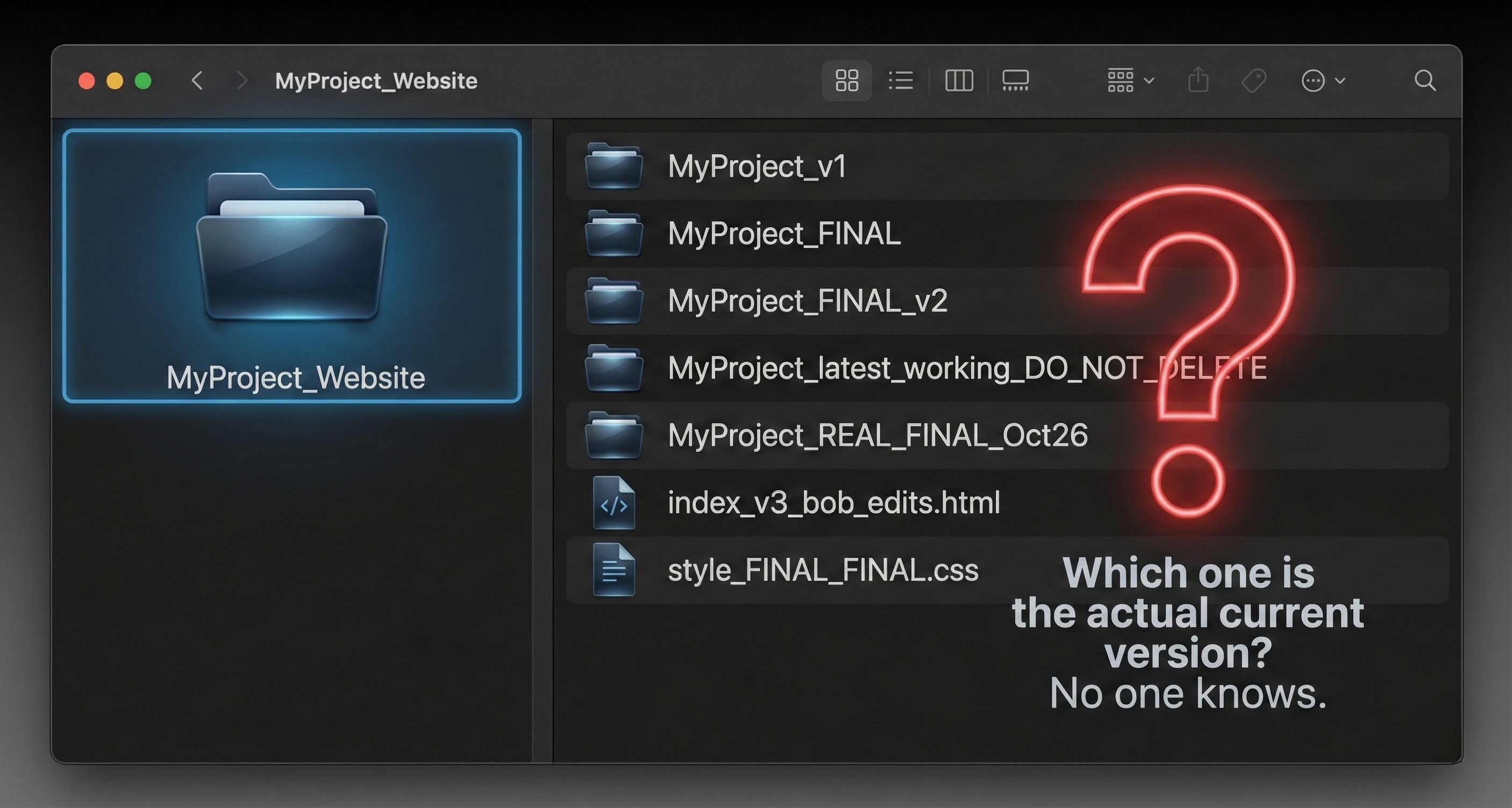
The "Final" Folder Syndrome: To avoid overwriting backups, developers would resort to increasingly desperate naming conventions. A project directory would look like this:
website_backup_may1website_latest_workingwebsite_FINALwebsite_FINAL_v2_wipwebsite_FINAL_REAL_DO_NOT_TOUCHFinding the actual, current version of the project was a guessing game. There was no single source of truth.
Accidental Overwrites & Lost Code: This was the most common and devastating problem. If Rohit copied his full project folder over Priya's, any un-backed-up changes Priya had made since her last share were instantly and irrecoverably wiped out. Countless hours of work were lost to a simple file-copy operation.
No History or Accountability: If a new bug suddenly appeared on the live website, there was no way to know who introduced it, when it happened, or why the change was made. You couldn't ask the system, "Show me the changes to this file from yesterday." You had to rely on memory and finger-pointing.
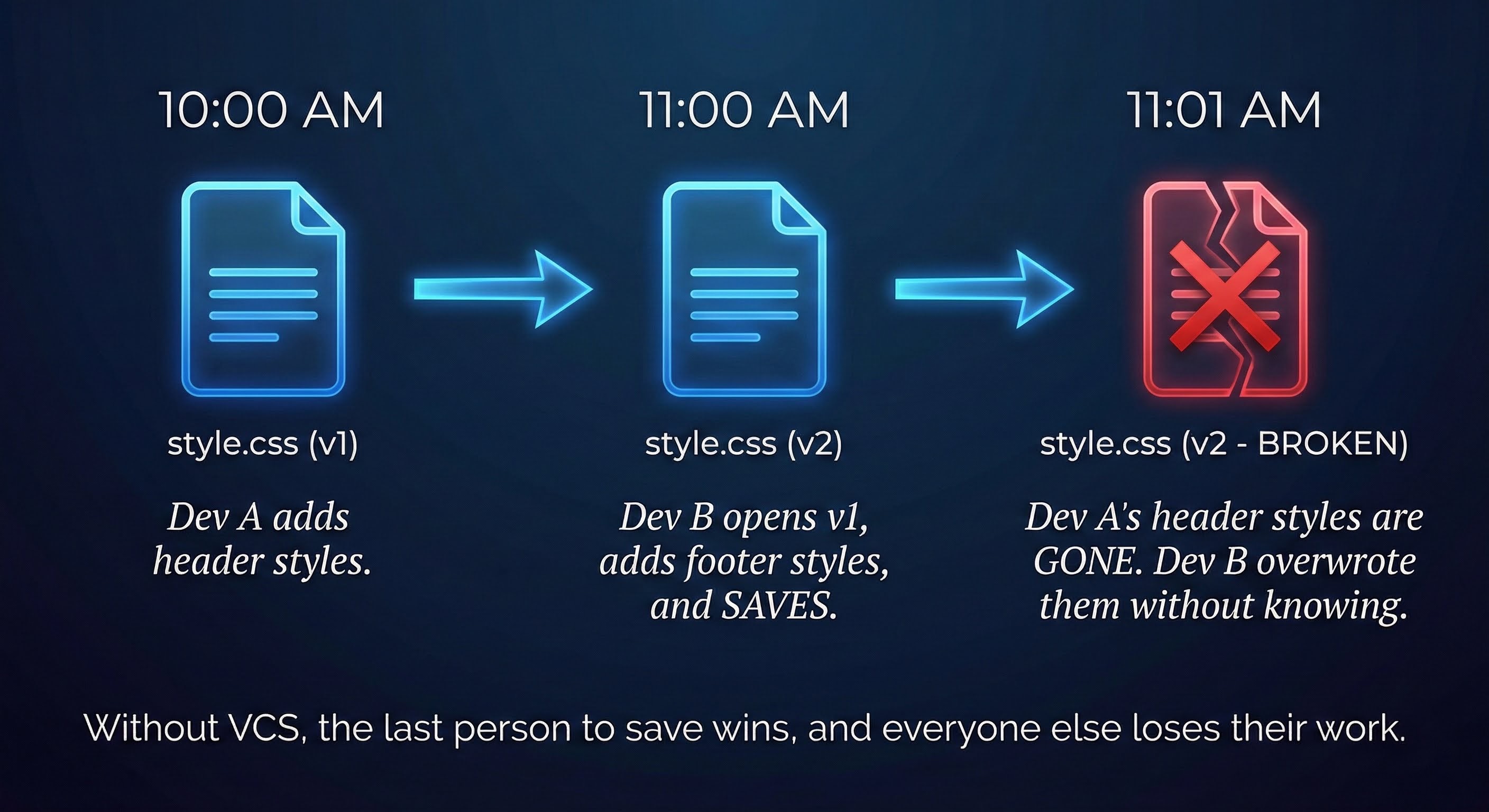
Paralyzed Collaboration: True parallel work was impossible. Developers had to "lock" files, shouting across the office, "I'm working on the
style.cssfile, nobody touch it!" This created massive bottlenecks where the entire team would have to wait for one person to finish their task before anyone else could safely work.
These problems made software development slow, stressful, and incredibly risky. The industry needed a better way.
The Solution: Version Control Systems
A Version Control System is a piece of software that manages changes to a set of files over time. It's like a "super-undo" button for your entire project, combined with a time machine and a sophisticated collaboration manager.
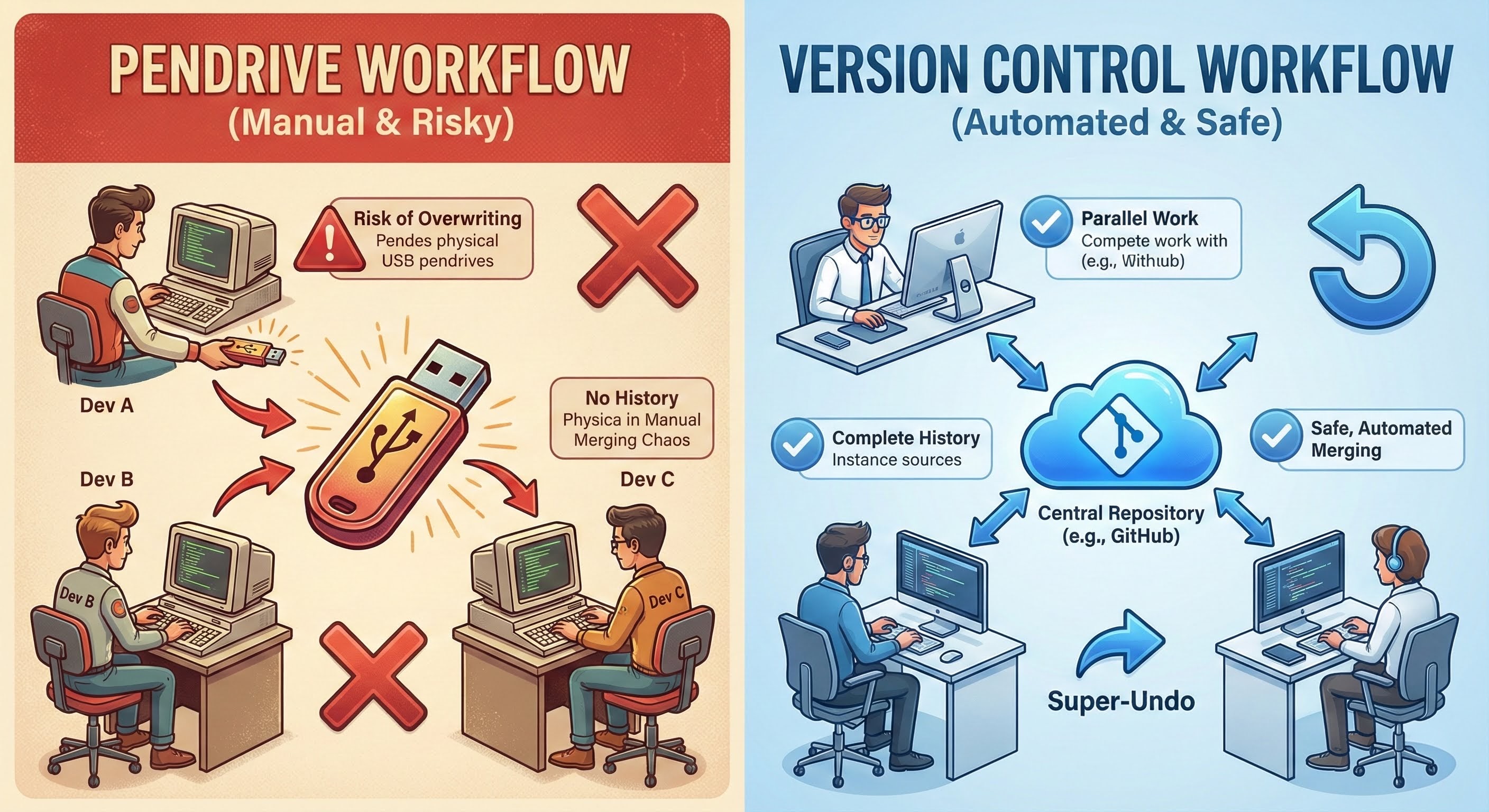
Instead of manually copying folders, developers use VCS commands. The workflow shifts dramatically:
A Shared Repository: There is a single, central copy of the project (the repository) hosted on a server.
Working in Parallel: Priya, Rohit, and Samar each "clone" a full copy of the repository to their own machines. They can all work on the same files at the same time without fear.
Tracking Changes: As they work, the VCS tracks every single line of code they change.
Safe Merging: When Priya finishes her feature, she doesn't copy files. She "pushes" her specific changes to the central server. The VCS intelligently merges her work into the main project. If Rohit tries to push his changes later, and they conflict with Priya's, the system won't overwrite her work. Instead, it will alert Rohit to the conflict and provide tools to help him resolve it safely.
This system solves every major problem of the pendrive era:
No More "Final" Folders: The VCS handles versioning automatically. You have one project folder, and you can travel back in time to any previous state.
No More Lost Code: Every change is recorded. You cannot accidentally overwrite work because the system forces you to resolve conflicts first.
Complete History: You can see a log of every change ever made, who made it, when, and the message they left explaining why.
Seamless Collaboration: Teams can work in parallel on countless features simultaneously, merging their work together only when it's ready.
In short, version control exists to bring order to chaos, turn individual efforts into team collaboration, and provide a safety net that allows developers to move fast without breaking things.


